
In this article
"Pa-lista muna." Every store owner hears it. Utang is part of how neighborhood stores work: it helps families get through until payday and keeps your suki coming back to you instead of the store across the street. In business terms it's a form of trade credit (opens in a new tab). But unmanaged utang is also one of the fastest ways to run out of money for restocking.
The goal isn't to stop giving utang. It's to give it on purpose, with clear limits and clean records, so it helps your sales instead of draining them.
Why unpaid utang hurts more than it looks
When a customer takes ₱500 of goods on credit, you didn't just lose ₱500 of sales for now. You spent your own cash to buy that stock, and until they pay, you can't use that money to restock. Your cash flow (opens in a new tab) slows down. Spread that across twenty families and your shelves start emptying even though your "sales" look fine on paper.
Set clear utang rules before you need them
Decide your policy once, then apply it to everyone. Fair, consistent rules are easier to explain and harder to argue with.
- Who can take utang: for example, only regular customers you know, or neighbors who've bought from you for a few months.
- A credit limit per customer: a maximum balance, such as ₱300 to ₱1,000 depending on how well you know them and how they pay.
- A due date: many stores tie it to the customer's payday (every 15th and 30th, or every Friday).
- What can be bought on credit: some owners allow food and essentials only, not cigarettes, alcohol or load.
- When credit pauses: for example, no new utang while an old balance is past due.
Record every utang, every time
Memory isn't a ledger. Every charge and every payment needs its own line with the date, the items or amount, and the running balance. Disputes almost always come from missing records.
| Date | Details | Charge | Payment | Balance |
|---|---|---|---|---|
| Nov 3 | Rice 2 kg, sardines 2 | ₱150 | ₱150 | |
| Nov 7 | Coffee 10, sugar | ₱95 | ₱245 | |
| Nov 15 | Payday payment | ₱200 | ₱45 | |
| Nov 18 | Eggs 6, bread | ₱75 | ₱120 |
Read the total back to the customer each time they add to it. It takes five seconds and prevents most "hindi ko alam na ganito na kalaki" surprises later.
Collect politely and consistently
Most customers want to pay; they just need a reminder at the right time. Keep collection friendly and private:
- Remind on or just before the due date, not weeks later.
- Talk privately, never in front of other customers.
- Accept partial payments and record them right away. Something is better than nothing, and it keeps the habit of paying.
- Offer easy ways to pay, such as cash or GCash, so there's no excuse to delay.
- If someone can't pay, agree on a small fixed amount per payday instead of letting the balance grow.
Utang from family, friends and neighbors
The hardest utang to manage is the one from people closest to you. Relatives and close friends often expect special treatment, and saying no can feel personal. Treat these accounts like any other, with the same limit and the same record, and explain kindly that the rule protects the store everyone depends on.
- Record family purchases the same way, even small ones.
- If you choose to give something for free, record it as a gift so your stock and cash still match.
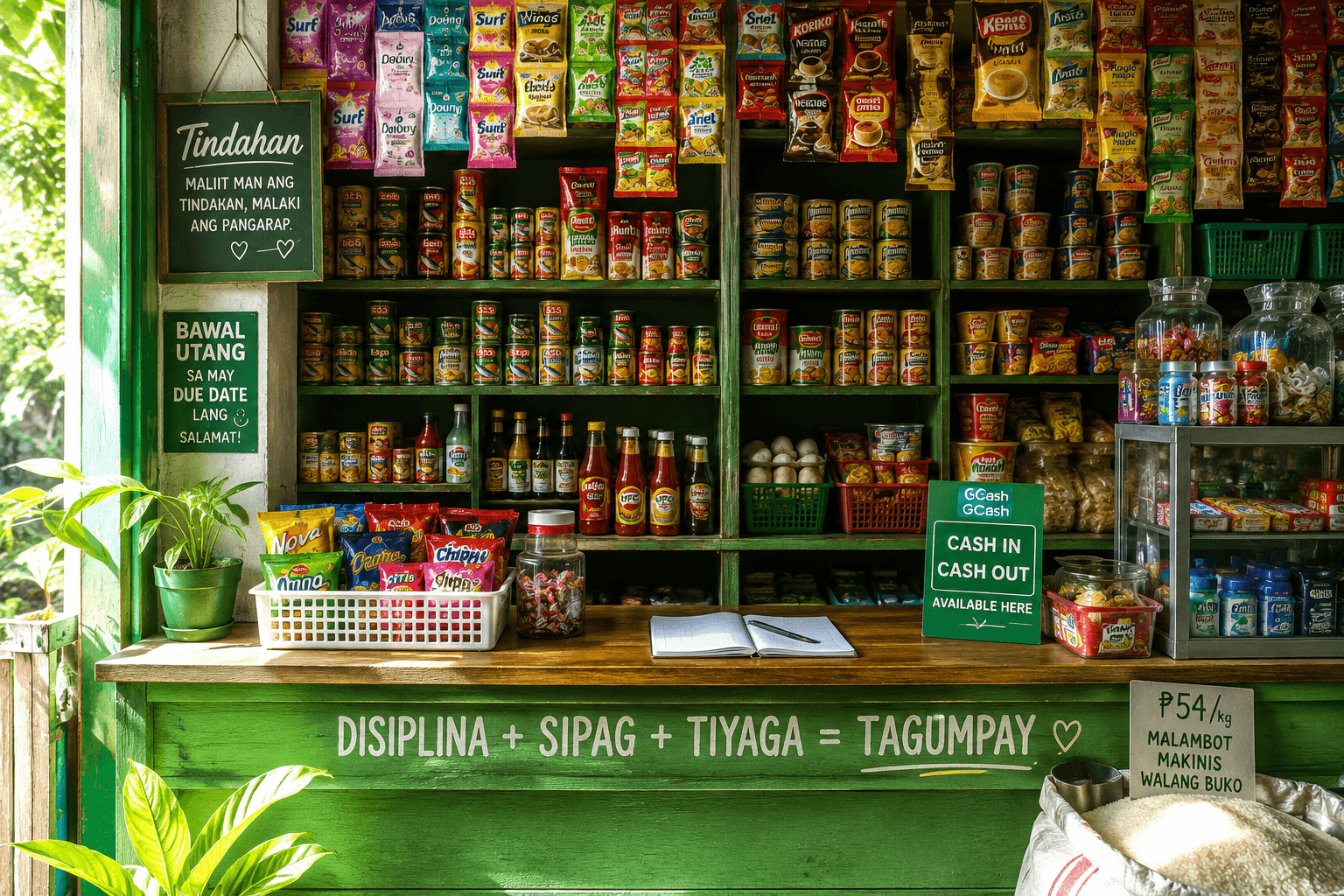
- Let the posted policy speak for you: "Pasensya na, lahat po kasi may limit."
How much utang is too much?
There's no single right number, but you can measure it. Compare your total outstanding utang with your average weekly sales. If your customers owe you more than about a week's worth of sales, a big part of your puhunan is tied up in credit, and restocking will start to feel tight.
Also look at how old the balances are. Utang that's paid every payday is healthy. Utang that's more than a month old is much less likely to come back; focus your reminders there first, and don't add new credit to those accounts until they're settled.
Warning signs to watch
- A balance that only grows and never goes down.
- A customer who starts buying for cash at another store while owing you.
- Many customers past due at the same time, which means your limits are too high.
- Your total utang growing faster than your monthly sales.
Check your total utang every week. If it keeps rising, tighten your limits for a while and focus on collecting before giving new credit.
Summary
Utang can grow your store's loyalty when it has rules: who qualifies, how much, until when, and a record of every peso. Combine clear limits with friendly, regular collection and you'll keep both your customers and your cash flow. For the rest of your daily money routine, see daily sales records for sari-sari stores.
Frequently asked questions
Should a sari-sari store give utang?
Utang builds customer loyalty, but only give it with clear rules: a credit limit per customer, a due date tied to payday, and a written record of every charge and payment.
How do I politely collect utang?
Remind customers privately on or before the due date, accept partial payments, offer easy payment options like cash or GCash, and agree on a fixed amount per payday if they can't pay in full.
How much utang limit should I give?
Base it on how well you know the customer and how they've paid before. Many stores start with a small limit and raise it for customers who pay on time.